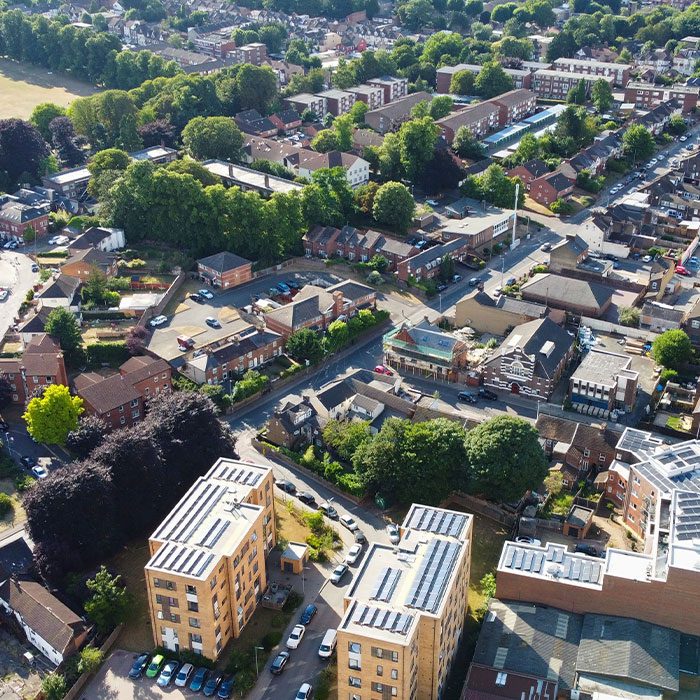
Luxury Living on London Commuter Belt
The Hive, Luton
Prices from £239,950
- Just 23 Minutes From Central London
- 5% Projected Rental Yields
- Major Regeneration Zone
Explore Buy-to-Let Opportunities in a Connected Commuter Market with Strong Rental Demand
View PropertiesBuy-to-let property for sale in Luton typically reflects the town’s role as a commuter and employment hub. Demand is driven by professionals working in the capital, airport-linked employment, healthcare, education and logistics, alongside long-term local renters seeking well-connected accommodation.
RWinvest sources buy-to-let properties for sale in Luton and other established UK locations, focusing on developments where rental fundamentals are already proven. Opportunities are assessed using local market data, tenant demand indicators and long-term performance considerations, helping investors compare options objectively and identify properties aligned with income goals.
Learn whether 2026 is a good year to invest with our key predictions for the year ahead, as well as a look back on 2025 and how the market performed. Download your essential guide now!
One of Luton’s strongest advantages is affordability relative to its location. Entry prices remain lower than many surrounding South East markets, allowing investors to access buy-to-let property for sale in Luton at more accessible levels while still benefiting from proximity to London.
Tenant demand is another key driver. Luton supports a broad renter base, including London commuters, airport and logistics workers, healthcare professionals and long-term local tenants. This diversity helps reduce reliance on a single tenant group and supports consistent occupancy throughout the year.
Connectivity underpins much of this demand. Luton benefits from direct rail links into central London, access to the M1 corridor and proximity to London Luton Airport. These transport advantages continue to support rental relevance, particularly for tenants prioritising commute times and flexibility.
For investors, these factors combine to create a market where income stability is supported by location fundamentals rather than short-term market trends.
Location within Luton plays a central role in rental performance. Properties close to the town’s two rail stations, major road links or employment zones tend to attract stronger demand from commuters and working tenants. Accessibility often has a direct influence on achievable rents and occupancy levels.
Property type is also important. Compact apartments may suit single professionals or airport-linked workers, while larger homes often appeal to sharers or families seeking longer tenancies. Matching property size and layout to local tenant needs helps support stable income.
Specifications should not be overlooked. Modern kitchens, efficient heating systems and low-maintenance finishes are increasingly expected by tenants. Properties that meet these expectations are more likely to attract reliable renters and reduce ongoing costs for landlords.
Finally, investors should consider the wider market context. Planned transport investment, housing development and employment growth can all influence future demand. Reviewing these indicators helps identify investment locations in Luton with sustainable rental relevance rather than relying on headline price movements alone.
According to Rightmove, the average property in Luton went for £323,545 over the last year. This is relatively stable compared to the previous year, with modest growth, maintaining the steady upward trajectory Luton property has shown in recent years.
The UK House Price Index shows that the average UK property is worth £271,000, significantly less than the current average price for a property in Luton.
While Luton property is pricier than the UK average, Luton property evangelists usually look at the town compared to London buy-to-let. According to the UK House Price Index, the average London property price is £553,258, making Luton a much more affordable prospect for people working in the capital.
Discover the rules behind buying rental property with RWinvest’s latest insights and guides!
The Hive, Luton, offers 5% projected yields and competitive prices in a top regeneration area on London's commuter belt. Enquire today for details on best remaining units.
Rental performance in Luton reflects the balance between accessible purchase prices and strong commuter-led demand. According to the Office for National Statistics, rental data published in early 2026, average rents across Bedfordshire have continued to rise, with typical private rents in Luton now around £1,205 per month and annual growth just under 4%, driven by demand spilling out from London and limited local supply.
Historically, the kind of buy-to-let property Luton investors most focus on delivers competitive yields compared with many surrounding South East locations. While returns vary by postcode and property type, areas with strong transport access often achieve more consistent occupancy and rental stability.
Price points across Luton remain below those of many neighbouring commuter towns, which supports yield potential for investors prioritising income. For those assessing buy-to-let properties for sale in Luton, understanding micro-locations and tenant demand patterns is often more important than relying on town-wide averages.
According to the latest figures from Home.co.uk and ONS, the average monthly rent in Luton is approximately £1,205, and annual rent growth in Luton is now running at just under 4%. The town and surrounding area continues to attract a large tenant pool, with the Bedfordshire region as a whole continuing to rank among the strongest rental demand areas in England.
Buy-to-let student accommodation is another feasible investment opportunity in Luton, as the area is home to the Luton campus of the University of Bedfordshire.
The Hive, Luton, offers 5% projected yields and competitive prices in a top regeneration area on London's commuter belt. Enquire today for details on best remaining units.
Luton town centre is a popular place to live – close to amenities and popular with students. Some of Luton’s cheapest buy-to-let properties for sale can be found in the town centre and inner suburbs, such as Farley. Luton town centre is just 22 minutes away from central London by train, so this is a convenient place for commuters to live.
But if you’re looking for more suburban areas for your investment, there are many in-demand residential districts to the east. Some of these are considered more upmarket areas, and this side of town offers good access to Luton Airport. This part of Luton includes places like Crawley, High Town, Round Green, Stopsley, and Wigmore.
To the north, some leafy suburbs are popular with families, such as Briscot, Bramingham, and Sundon Park. In West Luton, you can find areas like Challney and Lewsey. This region is a popular choice for commuters thanks to convenient access to the M1.
Act fast to snap up a unit from just £259,950. Short-term lets approved with projected yields from 9%+ and luxury onsite facilities including spa.
£301,304
3.7%
Act fast to snap up a unit from just £259,950. Short-term lets approved with projected yields from 9%+ and luxury onsite facilities including spa.
£258,781
4.40%
Is buy-to-let investment a good idea? Download our must-read guide with the latest information for 2026 and helpful tips for beginners.
Download Guide
Discover the best ways to invest £50,000 in property in 2026 with our free informative guide. Download your copy now for instant access!
Download Guide
£316,851
3.92%
£324,219
4.26%
£302,169
4.39%
(Average property prices taken from Rightmove, gross rental yield estimates calculated with figures from housesforsaletorent.co.uk)
Act fast to snap up a unit from just £259,950. Short-term lets approved with projected yields from 9%+ and luxury onsite facilities including spa.
On average, the most affordable property prices can be found in Luton Town Centre, especially in the inner suburbs. The LU1 postcode offers a gross average rental yield of 3.7%, but it can vary a fair amount depending on the specific area. For example, Farley Hill has cheaper property on average compared to the whole LU1 area and can offer a decent yield of around 4.4%.
Average rental yields can also reach over 4% in well-favoured suburbs such as Challney and Bramingham.
Discover what stamp duty is in the UK and learn how much stamp duty tax you could be likely to pay with our helpful guide.
As part of London’s commuter belt, Luton has long been considered one of the best towns for those working in London but wish to avoid the capital’s premium on living costs.
Those living in Luton can benefit from excellent transport links, making it a convenient place for commuters. When it comes to road travel, Luton is located right by the M1 and can offer easy access to both the M25 and the A1 – some of the most used routes in the UK.
The town’s railways are also a big draw for commuters as Luton residents can speed into London in just 22 minutes. Additionally, there are reliable bus links to surrounding towns, and of course, it’s worth mentioning London Luton Airport, which can be found in the LU2 area of Luton.
Overall, this is good news for buy-to-let investors in Luton, who seem set to profit from rising interest in the area, resulting in more significant capital gains, consistent rental demand and higher rental income.
Regeneration has previously contributed to Luton’s growth as an attractive residential area, and redevelopment efforts are still ongoing.
The Luton 2040 vision is a continuing project to create an ambitious future for Luton, create new jobs and homes, and boost economic activity. It includes a £160 million redevelopment of Luton airport by 2030, improvements to The Mall Luton, a brand new stadium for Luton Town Football Club, and a revamp for Luton’s iconic Hat District, among other plans.
The regeneration potential of Luton makes it more appealing to property investors who can invest in the area while the prices are low and benefit later on from increased capital value when they sell the property and more rental demand and rental income.

Is investing in buy-to-let a smart move? Download our essential guide for the latest insights on buy-to-let in 2026, packed with practical advice for beginners.
New-build property investment stands out as a highly favoured investment avenue. The allure of newly built developments lies in the minimal maintenance required before sending them to market, making them highly appealing to tenants who can move in at their convenience. Consequently, landlords can earn returns on their investment faster than older properties necessitating renovation.
Last year, the Luton 2040 vision saw a £20 million boost for new housing developments, which could see around 405 new homes introduced to the area. Once completed, the planned development (named ‘The Stage’) is expected to create employment opportunities for local people and support the growth of local businesses.
With ongoing shifts in property market trends, investing in newly developed properties such as this has the potential to result in increased rental growth in the forthcoming years.
Read More: Explore further into this investment trend through our latest buy-to-let guides, with topics ranging from new-builds in Islington to the most current hotspots across the UK!
Learn whether 2026 is a good year to invest with our key predictions for the year ahead, as well as a look back on 2025 and how the market performed. Download your essential guide now!
Although new-build properties offer modernity and efficiency, they often have a higher price tag. Opting for off-plan investment in new-build properties can provide investors with increased affordability and convenience.
Engaging in off-plan property investment involves purchasing properties during the early stages of construction, typically at a rate significantly lower than standard market prices. This early involvement often leads to greater capital appreciation, with the property’s value steadily increasing as construction progresses.
As mentioned, newly developed properties also tend to attract strong tenant interest, potentially leading to higher rental yields for investors.
Research suggests prime off-plan opportunities are frequently found in densely populated urban cities, particularly those with dynamic infrastructure and ongoing regeneration work. While there is potential for off-plan and new-build investment in Luton, investors may find greater success in UK cities with a higher concentration of ongoing construction projects, such as Liverpool or Manchester.
Luton has many advantages as a buy-to-let location, especially compared to London and other cities. The main reason is that the property is comparatively cheaper, making it more accessible and easier to find more lucrative rental yields.
But overall, northern cities still outperform southern areas when it comes to profitable buy-to-let ventures. Property experts Savills have forecast that the East of England region where Luton is situated is set to grow 19.3% by 2030, while other areas such as the North West are predicted to climb in value 27.6% in the same time frame.
For more information surrounding North West investment, take a look at our recent Warrington Property Investment guide.
Apart from capital growth, Luton also falls short when it comes to rental yields. They may be more attractive than London yields, but compared to major northern cities such as Liverpool (7.77%) and Manchester (9.12%), most properties in Luton can’t compete.
Those looking for a student investment property typically go after cities with larger student populations to ensure consistent demand. Established student cities such as Liverpool boast rental yields of 8.25%, according to a study by Paragon Bank.